Key takeaways
- A missed call is rarely a missed message. It's usually a booked job for the shop that answered next.
- Four numbers tell you what missed calls cost: call volume, missed rate, close rate and average job value.
- After-hours and peak-season calls are worth the most and get missed the most.
- Answering every call costs far less than one recovered job per week.
Why a missed call is a lost job
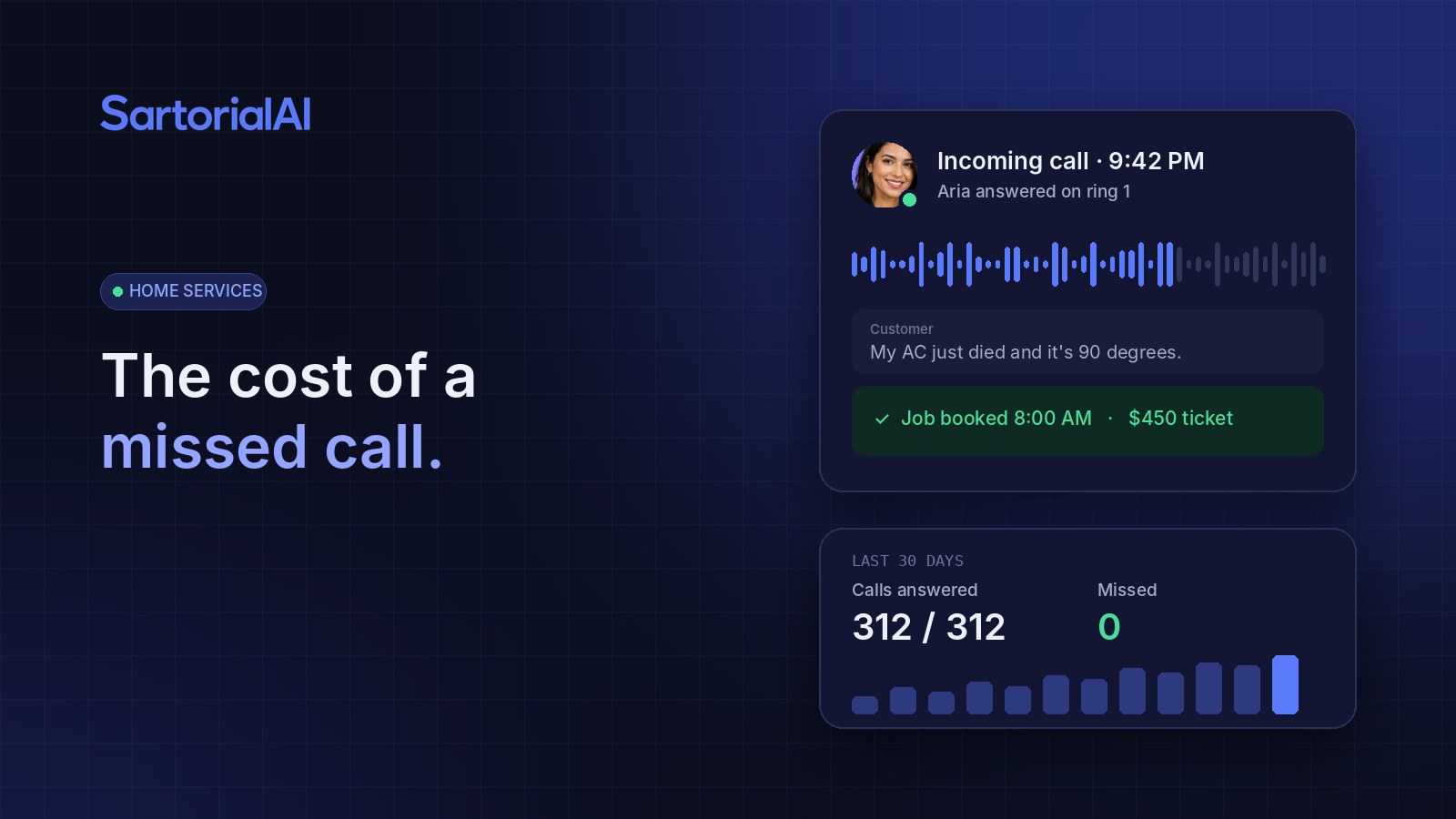
When a homeowner's AC dies in July or a pipe bursts on a Sunday, they aren't shopping. They're calling down a list until someone picks up. If that first call hits your voicemail, most people don't leave a message and wait. They dial the next company.
That's what makes missed calls in home services so expensive. The caller already needs the work done today. The only question is who gets it, and the answer is usually whoever answers first.
The four numbers that matter
You don't need industry averages to size the problem. You need four numbers from your own business:
- Calls per month. Pull this from your phone provider or call tracking. Count every inbound call, not just the ones that were answered.
- Missed rate. The share of calls that went to voicemail, rang out or hung up on hold. After-hours calls count.
- Close rate. Of the calls your team does answer, how many become booked jobs?
- Average job value. Your average ticket for a service call, repair or install.
Multiply them together and you have a monthly number: calls × missed rate × close rate × average job value.
A worked example
Say your shop takes 300 calls a month and misses 25% of them. That's 75 missed calls. If you normally book half of the calls you answer, those 75 calls represent about 37 jobs. At a $450 average ticket, that's roughly $16,875 a month, or more than $200,000 a year, going to someone else.
Even if you only recovered a third of that, you'd be adding about $5,600 a month in booked work. Try your own numbers in the calculator below.
Where the misses actually happen
Most owners assume missed calls are an after-hours problem. That's part of it, but the pattern is usually broader:
- Evenings and weekends, when emergencies happen and the office is closed.
- The first hot or cold week of the season, when call volume doubles overnight.
- Lunch and shift changes, when the person on the phones steps away.
- Busy lines, when two or three calls come in at once and only one gets picked up.
These are also the highest-value calls. A customer with no heat at 9 PM is ready to book now.
What answering every call actually looks like
An AI front desk picks up on the first ring, every time, including nights, weekends and when your team is slammed. It asks your triage questions, captures the address and the problem, checks your real schedule and books the visit. True emergencies get routed to your on-call tech. Routine calls get the next open slot.
Every call is logged in your CRM with a summary, so your dispatcher starts the morning with a booked board instead of a voicemail inbox.
Answering is only half the job
The other half is follow-up. Estimates that sit unanswered for a week usually go cold. An AI follow-up agent texts and emails open quotes until the homeowner books or says no, then asks for a review once the job is done. That's revenue you've already earned the right to, and most shops leave it on the table simply because nobody has time to chase it.
Try it on your own business
Start free and see SartorialAI answer, book and follow up for you. Live within 48 hours.